Higher train speeds, greater axle loads and the use of different wagon types require innovative systems.
ITSS has developed Pegasus, a system that meets the strictest safety standards while also taking into account the high cost pressures faced by railway operators today.
The hot axle box detector Pegasus is the only system on the market equipped with a special vibration sensor. This sensor measures the influence of train-induced vibrations on the system. These vibrations can cause gradual, imperceptible damage. The damage only becomes apparent when the system fails.
However, by monitoring the influence of these vibrations, timely intervention can prevent premature damage. This unique function is protected by a European patent (EP 1772342).
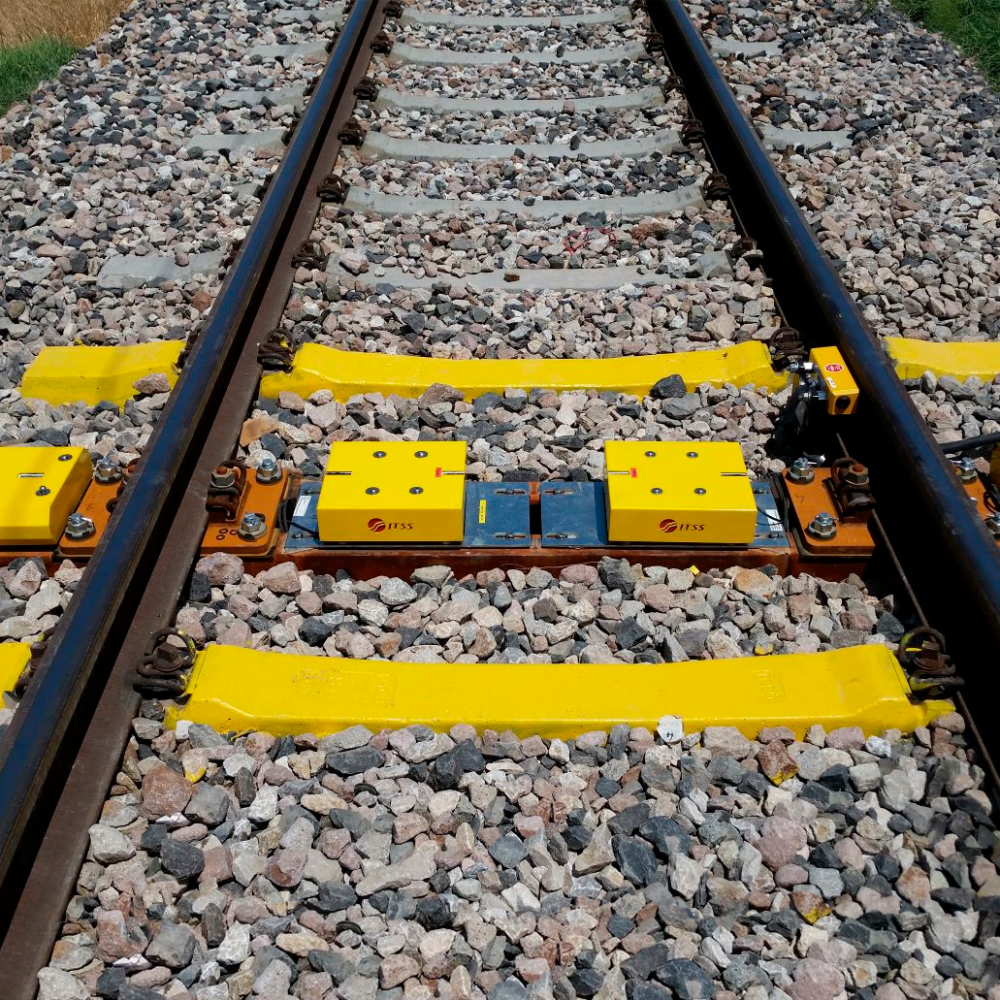
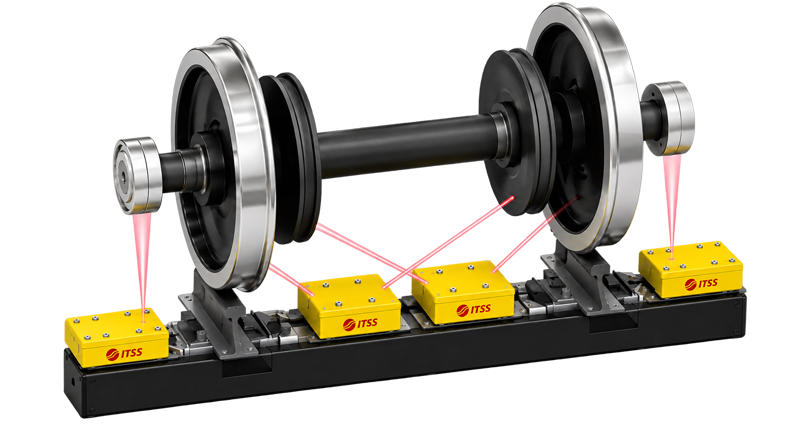
The system Pegasus identifies and records all standard axle types and braking systems. It detects overheated axle boxes and defective brakes with high reliability.
The key to the system’s outstanding price-performance ratio Pegasus lies in its modular design. The 10-beam scanners, unique on the market, scan all standard axle-bearing types over a maximum width of 140 mm, detecting any hazardous condition.
State-of-the-art digital and infrared technology ensures rapid and precise processing of the measured values.
1. General technical data
Technical data
- Operating system: Linux
- IVM vibration protection and threshold monitoring: (Patent EP 1772342)
- Measurement of all standard axle bearing types
- Continuous measurement of the entire bearing surface
- Enhanced safety through redundant detection, using up to 10 independent beams
- 3D thermal image with approx. 7,200 points scanned at 500 km/h
Applicable standards
- TSI Interoperability of the trans-European high-speed rail system (Directive 2006/860/EC)
- EN 55019-8 + A1:99 + A2:02, Class B (Emissions test)
- EN 50121-4:00 (EMC)
- EN 50125-3
- Development according to EN 50128
Modular system design
- Sensor modules can be replaced in a few minutes
- No adjustment is required after replacement
- Alignment without removing the system components
2. Scanner specifications
- Scanner connection: Ethernet 100 MB
- Scanner versions: 4/8/10 beams
- Up to 32 HBD/HWD scanners can be connected to a single trackside electronic system
- Maximum number of axles: 3000
- Data link format: TCP/IP, several protocols (XML, OPC, etc.)
- Automatic identification of locomotives, wagons and train compositions
3. HWD (Hot wheel detector)
- Thermal imaging of brakes
- Maximum train speed: 500 km/h
- Thermal imaging temperature range: 50°C - 650°C
- Temperature resolution: +/- 1°C
- Accuracy (repeated measurements): +/- 0,1°C
- Sensor width for rim and disc brakes: 50 - 140 mm
- Redundant auto-calibration (RAC) and self-monitoring
- Effective range: -40°C to +70°C
- Scans rim and disc brakes
4. HABD (Hot axle box detector)
- Thermal imaging of axle bearings
- Maximum train speed: 500 km/h
- Thermal imaging temperature range: 0°C - 200°C
- Temperature resolution: +/- 1°C
- Accuracy (repeated measurements): +/- 1°C
-
Sensor width:
60 - 140 mm (10 beams) / 50 - 120 mm (8 beams) / 25 - 60 mm (4 beams) - Redundant auto-calibration (RAC) and self-monitoring
- Effective range: -40°C to +70°C
- Scans all types of axle bearings